Shop AR-10 Uppers For Sale by Caliber
Select a category below to view available products and options.
Shop AR-10 Uppers
There are no products listed under this category.

Ballistic Barn carries a premium selection of AR-10 uppers in several large-frame calibers, built for applications ranging from hunting and general-purpose rifles to precision long-range and suppressor-ready configurations. Assembled by trained armorers in-house in Fredericksburg, Texas, our AR-10 uppers are available in multiple configurations, while our complete AR-10 uppers include a compatible bolt carrier group (BCG) and charging handle. Additional component upgrades are available to suit your build.
Select a category below to view available products and options.
There are no products listed under this category.
Ballistic Barn offers assembled AR-10 uppers in several popular large-frame calibers. Whether you're selecting an upper for hunting, precision shooting, extended-range use, suppressed shooting or a general-purpose rifle, our selection includes configurations for a variety of applications.
Available models vary in barrel length, profile, twist rate, gas system, free-float handguard and muzzle configuration. Some also include a compatible bolt carrier group and charging handle. We use the term complete upper specifically for configurations that include both a compatible BCG and charging handle.
Our large-frame upper assemblies are built in Fredericksburg, Texas using carefully selected components. Applicable units are individually checked for proper headspace with Manson GO and NO-GO gauges and inspected for fit and function before shipping.
Configurations range from compact setups to longer precision-oriented and hunting builds. Individual models may feature different barrel materials, profiles, free-float M-LOK handguards, muzzle devices and caliber-specific components.
Large-frame AR terminology is not always consistent across the firearms industry. Terms such as AR-10 upper, complete upper, upper assembly, barreled upper, AR-10 and LR-308 may be used differently among manufacturers. The definitions below explain how Ballistic Barn identifies the products on this site.
Building an upper from individual receiver components instead? Shop our AR Upper Receivers for standalone receiver components used as the foundation of AR upper builds.
Ballistic Barn carries several large-frame calibers for hunting, precision, extended-range and suppressed applications. Browse by caliber to compare available barrel lengths, profiles, handguards and complete configurations.
Start with the intended application and the large-frame receiver pattern in use. Caliber, barrel length, profile, twist rate and overall configuration can influence weight, handling, recoil and ballistic performance.
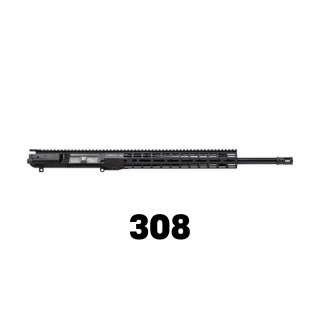
308 Winchester is a common general-purpose choice thanks to broad ammunition availability and established component support. Barrel length and overall weight can then be selected based on the desired balance between handling and ballistic performance.
308 Winchester, 6.5 Creedmoor and 25 Creedmoor provide several hunting options. Cartridge selection should reflect the intended game, expected shooting distance, projectile choice, recoil preference and applicable regulations.
Precision-oriented configurations often use longer or heavier barrel profiles for greater rigidity and consistency. 6.5 Creedmoor, 22 Creedmoor and 25 Creedmoor provide options for shooters prioritizing precision and extended-range performance.
Cartridges such as 6.5 Creedmoor, 22 Creedmoor and 25 Creedmoor offer different approaches to extended-range shooting. Barrel length, twist rate, projectile selection and ammunition should be considered when comparing configurations.
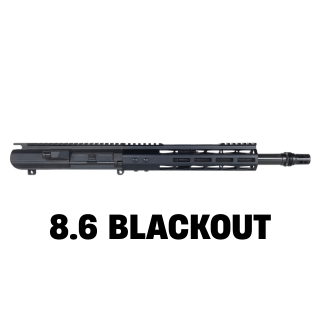
8.6 Blackout is commonly associated with compact and suppressed configurations, while other large-frame calibers can also be used with compatible suppressors. Barrel length, muzzle threads, gas-system setup, ammunition and suppressor-mount compatibility should all factor into your choice.
Shorter configurations can reduce overall length and change handling characteristics, but barrel length should be matched carefully to the cartridge and intended use. Compare the individual product specifications when selecting a compact large-frame upper.
Two AR-10 uppers chambered for the same cartridge can still have very different characteristics. Compare the individual components, receiver pattern and specifications before choosing.
Influences weight, balance, handling and ballistic performance. Match the barrel configuration to the cartridge and intended application.
Gas-system configuration varies by barrel, caliber and overall setup. Available models may also offer adjustable gas-block options.
Provides mounting space for compatible accessories. On large-frame platforms, receiver pattern, rail height and barrel-nut compatibility should also be confirmed.
Options vary by model and may include flash hiders, muzzle brakes, compensators, thread protectors or suppressor-compatible devices.
BCG requirements vary by caliber and large-frame configuration. Check the individual product specifications and compatibility requirements when selecting components.
Available charging-handle configurations provide different handling features and must match the applicable large-frame receiver. Our complete configurations include a compatible charging handle.
Large-frame AR platforms do not follow one universally interchangeable receiver pattern. Upper and lower receiver dimensions, profiles and component relationships can differ among DPMS-pattern systems, PSA PA-10 generations, CMMG platforms, Armalite-pattern systems and other proprietary designs.
Before ordering, confirm the receiver pattern and generation of your lower and review the compatibility information for the selected upper. Important points can include:
If you're unsure whether a Ballistic Barn AR-10 upper is compatible with your existing lower, contact us before ordering and we'll help you review the applicable receiver pattern and product specifications.
The products on this page are assembled large-frame uppers rather than standalone receiver components. An upper receiver by itself does not include the barrel, handguard, gas system and other major components found on the assembled AR-10 uppers featured here.
If you're selecting individual components for a custom build, browse our AR Upper Receivers for standalone receiver components, including available AR-15 and large-frame receiver configurations.
An AR-10 upper is an assembled large-frame upper containing major components such as the upper receiver, barrel, handguard and gas system. A standalone upper receiver is only the receiver component and is not the same product as the assembled AR-10 uppers sold on this page.
We use "complete upper" for configurations that include both a compatible BCG and charging handle along with the assembled upper. Check the individual product listing for exact components and specifications.
An AR-10 upper is an assembled unit containing the major upper components but does not necessarily include a BCG and charging handle. At Ballistic Barn, a complete AR-10 upper specifically includes both a compatible BCG and charging handle.
An AR-10 upper is an assembled unit containing the upper receiver, barrel, handguard, gas system and related components. An upper receiver is the standalone receiver component used as the foundation of an upper build. Customers looking for the receiver component by itself can shop our AR Upper Receivers .
No. Large-frame AR receivers can use different patterns, dimensions and profiles. Compatibility should be confirmed using the specifications of the upper and lower receiver before ordering.
AR-10 and LR-308 are commonly used when discussing large-frame AR platforms, but they can refer to different receiver patterns and component specifications. Large-frame parts should not be assumed interchangeable solely because they are described as AR-10 or 308-pattern components.
Applicable models are individually checked for proper headspace using Manson GO and NO-GO gauges and inspected for fit and function before shipping.
We currently offer categories for 308 Winchester, 6.5 Creedmoor, 22 Creedmoor, 25 Creedmoor and 8.6 Blackout. Available models, barrel lengths and configurations vary by caliber.
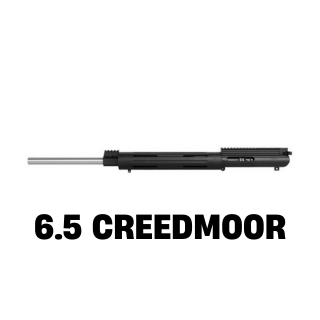
308 Winchester is commonly selected for general-purpose shooting and hunting, while 6.5 Creedmoor is frequently selected for precision and extended-range applications. Compare ammunition, barrel configuration, intended distance and other product specifications when choosing between them.
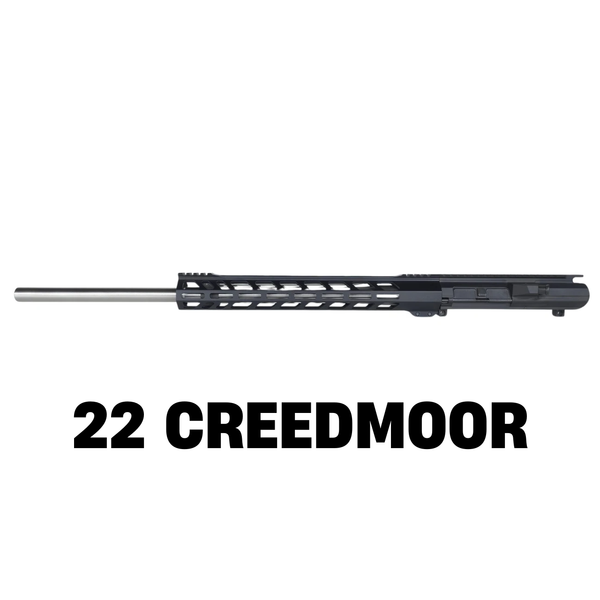
22 Creedmoor is a high-velocity cartridge commonly associated with precision, varmint and extended-range applications. Available barrel length, twist rate and other specifications should be matched to the ammunition and intended use.
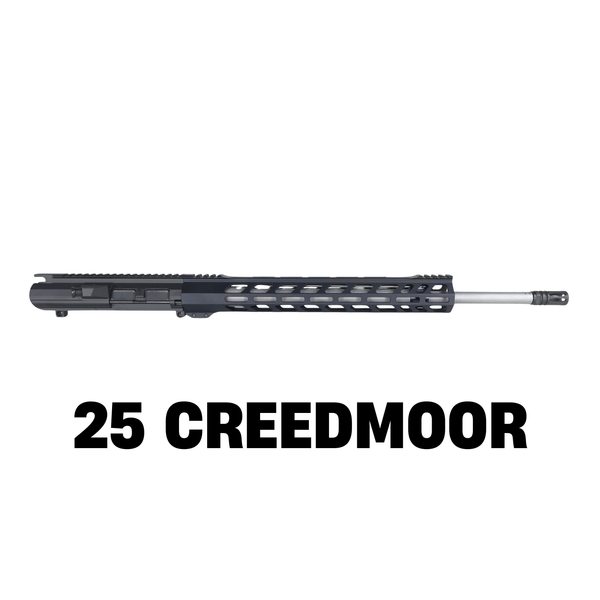
25 Creedmoor provides another large-frame option for hunting and extended-range applications. Compare projectile choice, barrel specifications, ammunition availability and intended use when considering it alongside 308 Winchester, 6.5 Creedmoor and other large-frame cartridges.
Large-frame AR platforms can differ in receiver pattern, dimensions, profile and other specifications. DPMS-pattern, PSA PA-10, CMMG, Armalite-pattern and other systems should not automatically be assumed interchangeable. Confirm the applicable receiver pattern before ordering an upper.