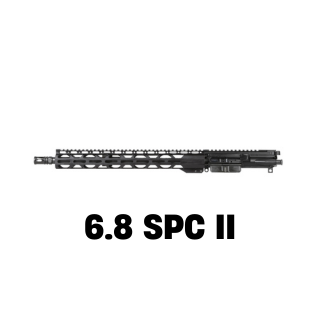
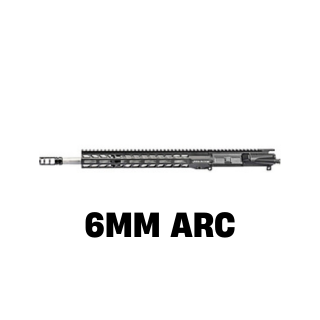
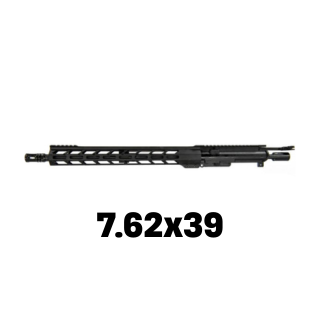
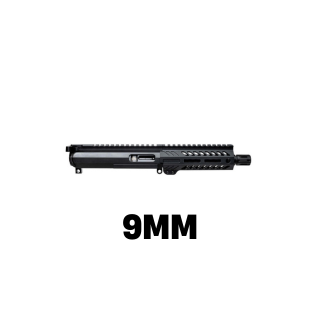
AR-15 Uppers and Complete Uppers
Ballistic Barn offers assembled AR-15 uppers in 16 caliber
categories, with multiple barrel lengths, materials and
configurations. Whether you're shopping for a general-purpose
upper, a hunting setup, a varmint rifle or a precision-oriented
build, the right combination starts with your intended use.
Our selection includes upper assemblies and AR-15 complete
uppers. At Ballistic Barn, a complete upper includes both a
compatible bolt carrier group (BCG) and charging handle.
Assemblies without both components are not described as
complete uppers. Review each product listing for its
included components and specifications.
Why Choose a Ballistic Barn AR-15 Upper?
Our AR-15 upper assemblies are built in Fredericksburg,
Texas, using selected components. Every assembled AR-15 upper is
individually checked for proper headspace using Manson
GO and NO-GO gauges and inspected before shipping.
Headspace Checked
Every assembled AR-15 upper is individually checked using
Manson GO and NO-GO gauges.
Assembled in Texas
Assembled and inspected in Fredericksburg, Texas.
Multiple Configurations
Choose from different calibers, barrel lengths,
profiles, handguards and component combinations.
Individual configurations may feature chrome moly or
stainless steel barrels, different gas systems,
free-float M-LOK handguards and caliber-specific
components. For questions about a particular upper,
call us at 830-362-7999.
AR-15 Upper Terminology Explained
The terms upper, upper assembly, complete upper and
upper receiver are sometimes used interchangeably
across the industry. At Ballistic Barn, they describe
different products and levels of assembly.
AR-15 Upper
An assembled upper containing the receiver,
barrel, handguard, gas system and related
components. Exact specifications vary by model.
Upper Assembly / Barreled Upper
An upper with its major components installed.
These terms do not automatically mean that a
bolt carrier group or charging handle is included.
Check the individual listing.
Complete Upper
An assembled upper that includes both a
compatible bolt carrier group (BCG)
and charging handle. We reserve
the term complete upper for configurations
containing both components.
Upper Receiver
The standalone receiver component without
the barrel and handguard. It is a component
for building an upper, rather than one of
the assembled uppers featured on this page.
Shop our
AR-15 Upper Receivers
.
Choosing the Right AR-15 Upper
Caliber is only one part of selecting an AR-15 upper.
Barrel length, barrel profile, twist rate, gas system
and overall weight can make two uppers chambered
for the same cartridge perform and handle differently.
General-Purpose and First Builds
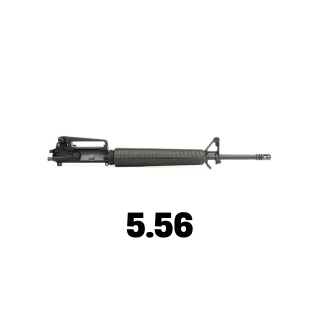
5.56 NATO Uppers
and
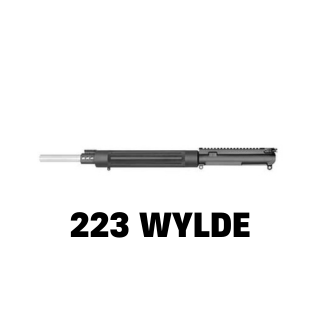
223 Wylde Uppers
are common starting points because of ammunition
availability and broad component support. A
16-inch barrel is a popular general-purpose
configuration, balancing handling and performance.
Precision and Longer-Range Shooting
6mm ARC Uppers
,
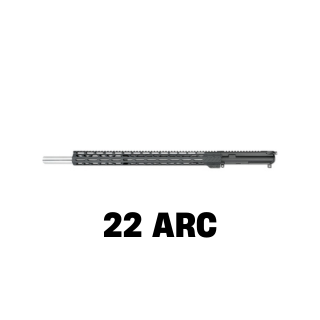
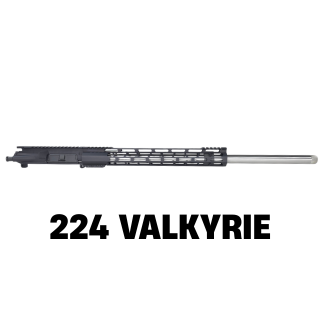
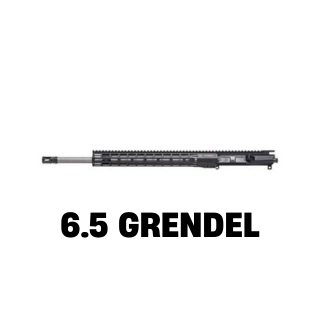
6.5 Grendel, 22 ARC and 224 Valkyrie are
options for shooters prioritizing external
ballistics. Longer stainless steel barrels
and heavier barrel profiles may be worth
considering when weight is less important
than the intended precision application.
300 Blackout and Suppressed Applications
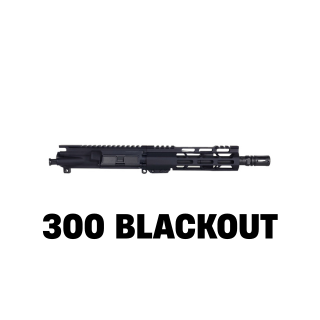
300 Blackout Uppers
are available in configurations suited to
different applications, including short-barreled
and suppressed use. Supersonic and subsonic
ammunition can create different operating
conditions. Review barrel length, gas-system
configuration, muzzle threads and suppressor
compatibility before selecting an upper.
Large-Bore AR-15 Uppers
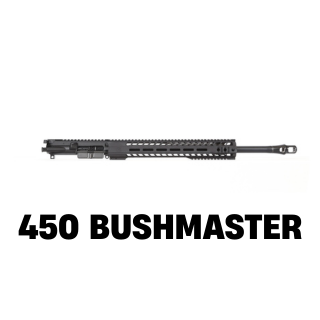
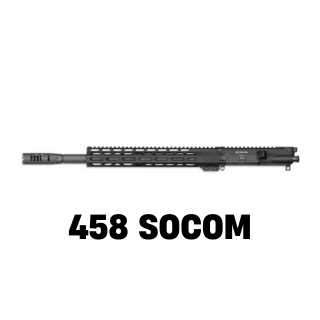
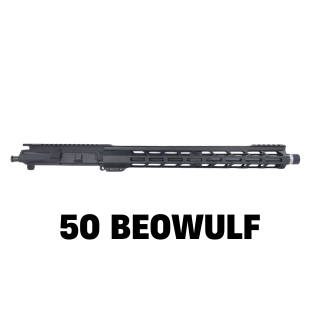
450 Bushmaster, 458 SOCOM and
50 Beowulf Uppers
provide large-bore options for compatible
AR-15-pattern platforms. These cartridges
have caliber-specific component requirements,
so verify the bolt, magazine, operating system
and lower compatibility for the exact model.
AR-15 Upper Configuration Options
Two AR-15 uppers chambered for the same cartridge
can have substantially different characteristics.
Comparing individual component specifications helps
narrow the selection beyond caliber alone.
Barrel length influences handling, overall
weight and achievable velocity. Barrel profile
affects weight distribution and heat behavior.
Compare the material, profile and length
listed for each upper.
Gas-system length and configuration vary
with barrel length and caliber. The gas
block, gas tube and related components
should be matched to the specific upper
and its intended operating conditions.
A free-float handguard provides accessory
mounting space without applying direct
handguard pressure to the barrel. Compare
handguard length, clearance and mounting
options for the intended setup.
Depending on the configuration, options
may include flash hiders, muzzle brakes,
compensators or thread protectors.
Verify muzzle thread specifications
before selecting replacement devices
or suppressor-compatible accessories.
Bolt and BCG requirements depend on
cartridge and upper configuration.
Not every AR-15 caliber uses the same
bolt. Confirm compatibility with the
barrel extension and manufacturer
specifications.
Standard, extended-latch and ambidextrous
designs offer different handling
characteristics. Ballistic Barn complete
upper configurations include a compatible
charging handle.
AR-15 Upper and Lower Compatibility
Many AR-15 upper assemblies are designed around
standard AR-15-pattern lower receiver dimensions.
However, physical fit does not guarantee that
every caliber or component combination will
function correctly. Some cartridges require
different magazines, bolts, operating components
or lower receiver arrangements.
Before ordering, verify the following for your
selected upper and lower:
- Upper and lower receiver fit
- Cartridge and magazine compatibility
- Bolt and barrel extension compatibility
- Bolt carrier group requirements
- Buffer and operating-system requirements
- Barrel and gas-system configuration
- Muzzle thread and device compatibility
- Applicable federal, state and local laws
The specifications on the individual product
listing and the requirements of your lower
receiver should take priority over general
compatibility descriptions.
Building Your Own AR-15 Upper?
The products featured on this page are assembled
AR-15 uppers. If you prefer to start with individual
components, explore our
AR-15 Upper Receivers
category for standalone receiver components.
You can also browse individual barrels, gas blocks,
handguards, muzzle devices, bolt carrier groups
and charging handles using the linked configuration
sections above.
AR-15 Upper Frequently Asked Questions
What is an AR-15 upper?
An AR-15 upper is the assembled upper
portion of the platform, generally
containing the receiver, barrel, handguard,
gas system and related components. Exact
included parts depend on the listing.
What is included with an AR-15 complete upper?
At Ballistic Barn, a complete upper
includes the assembled upper, a compatible
bolt carrier group and a charging handle.
An upper assembly without both of those
components is not labeled a complete upper.
Will any AR-15 upper fit any AR-15 lower?
No. Many AR-15-pattern uppers share common
mounting dimensions, but compatibility
is not universal. Caliber, magazine type,
bolt, buffer arrangement and proprietary
receiver dimensions can affect fit and
function. Verify the specific combination
before ordering.
Can I change calibers by replacing the upper?
In many compatible configurations, replacing
the upper allows a different caliber to be
used with the same lower. Depending on the
cartridge, other components such as magazines,
bolts or buffer-system parts may also need
to change.
Are Ballistic Barn uppers headspace checked?
Every Ballistic Barn assembled AR-15 upper is
individually headspace checked using Manson
GO and NO-GO gauges and inspected before shipping.
What AR-15 upper is best for general-purpose use?
5.56 NATO and 223 Wylde are common choices
because of broad ammunition availability
and component support. The best barrel
length and configuration depend on the
intended application and preferred balance
of weight and handling.
What AR-15 upper calibers does Ballistic Barn offer?
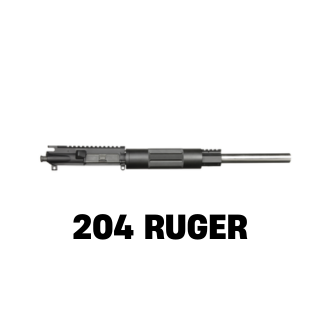
Our AR-15 upper categories include 204 Ruger,
22 ARC, 223 Wylde, 224 Valkyrie, 300 Blackout,
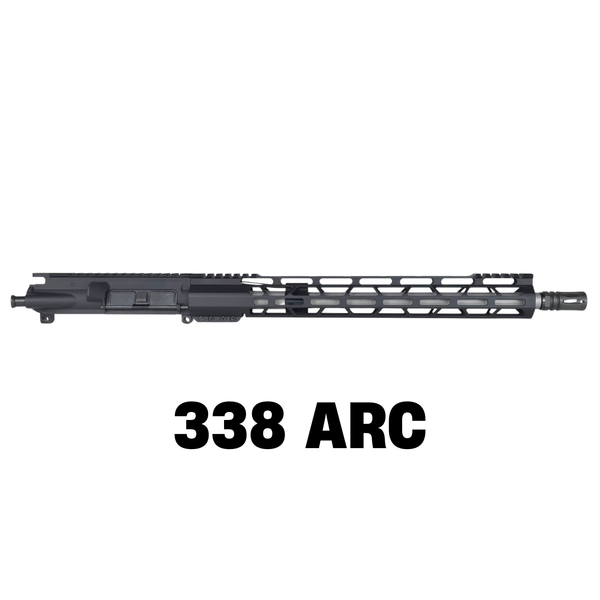
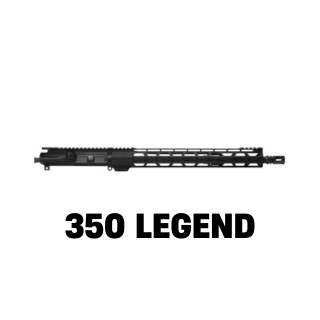
338 ARC, 350 Legend, 450 Bushmaster, 458 SOCOM,
5.56 NATO, 50 Beowulf, 6.5 Grendel, 6.8 SPC,
6mm ARC, 7.62x39 and 9mm. Product availability
varies by caliber and configuration.
Why do some AR-15 calibers require different bolts or magazines?
Cartridges supported by the AR-15 platform
differ in case-head dimensions, body shape
and overall geometry. These differences
can require caliber-specific bolts,
magazines or other compatible components.
Confirm requirements for the exact upper
rather than assuming standard 5.56 NATO
components are interchangeable.
Why does barrel twist rate matter?
Barrel twist rate affects bullet stability.
Different projectile lengths, weights and
designs may require different twist rates.
Compare the twist specification listed on
the product page with the ammunition you
intend to use.
Why is 300 Blackout configuration important?
300 Blackout is used with both supersonic
and subsonic ammunition in suppressed and
unsuppressed configurations. Those combinations
can create different operating conditions.
Barrel length, gas-system design, ammunition
and suppressor use can affect performance.
Always verify the specifications and
intended application of the selected upper.
Why can 7.62x39 AR-15 uppers be magazine-sensitive?
The 7.62x39 cartridge has different case
geometry from 5.56 NATO. Reliable feeding
depends on compatible magazines and related
components. Verify the magazine, bolt and
other caliber-specific requirements for
the particular upper.
Are short-barreled AR-15 uppers legal?
Federal and state laws can restrict how
short-barreled uppers are installed and
configured. Installing a barrel shorter
than 16 inches on a rifle lower may create
a short-barreled rifle subject to federal
requirements. Confirm applicable laws and
the legal configuration of the firearm
before installation.