

Exploring the .204 Ruger on the AR-15 Platform: A Varmint Hunter's Dream
Posted by Ballistic Barn on December 10, 2025
Updated: September 12, 2026
Welcome to our firearms blog, where we dive deep into the world of rifles, cartridges, and builds that push the boundaries of performance. Today, we're tackling a niche but incredibly exciting combination: the .204 Ruger cartridge chambered in the ever-versatile AR-15 platform. If you're a varmint hunter, long-range plinker, or just someone who appreciates high-velocity precision, this setup deserves a serious look. The .204 Ruger brings exceptional speed, a flat trajectory, and very mild recoil to the modular AR-15, transforming it from a standard 5.56 NATO rifle into a specialized tool for varmints, predators, and precision shooting at extended distances. In this updated guide, we'll cover the cartridge's history, ballistics, integration with the AR-15, component considerations, advantages, drawbacks, ammunition support, and real-world applications.
The Origins of the .204 Ruger: A Modern Varmint Legend
The .204 Ruger didn't just appear out of thin air—it's the result of a collaboration between Hornady Manufacturing and Sturm, Ruger & Co. Introduced commercially in 2004, the cartridge was developed to provide varmint hunters with high velocity, low recoil, and a flat trajectory in an efficient package. Based on the .222 Remington Magnum case necked down to accept .204-inch bullets, it brought a commercially supported .20-caliber option to shooters who previously had to look largely to wildcat cartridges for this type of performance.
Ruger and Hornady recognized an opportunity in the varmint hunting market, where shooters wanted more velocity and a flatter trajectory than many traditional .223 Remington loads while maintaining low recoil and efficient powder use. The .204 Ruger quickly developed a following among prairie dog hunters, varmint shooters, and predator hunters. Its compatibility with semi-automatic platforms also made it an appealing alternative for shooters who wanted high-velocity performance without leaving the familiar AR-15 ecosystem.
More than two decades after its introduction, the .204 Ruger remains commercially supported by ammunition and component manufacturers. Hornady continues to support the cartridge with factory ammunition, bullets, and .204 Ruger cartridge cases for reloaders, making it far more than a short-lived specialty cartridge.
Ballistics Breakdown: Speed, Flatness, and Efficiency
The .204 Ruger's performance is where it truly shines. This cartridge is built around velocity. Depending on bullet weight, barrel length, ammunition, and atmospheric conditions, factory .204 Ruger loads commonly produce muzzle velocities approaching or exceeding 4,000 fps with lighter varmint bullets.
Hornady's current varmint ammunition families continue to emphasize the same characteristics that made the .204 Ruger popular in the first place: high velocity, flat trajectories, reduced wind drift, accuracy, and rapid-expansion varmint bullets. Hornady's V-MAX bullets remain specifically designed around accuracy, high ballistic efficiency, and rapid fragmentation for varmint applications.
The practical result is a cartridge with a very flat trajectory compared with many conventional small-caliber rifle rounds. That can reduce the amount of elevation correction required at typical varmint-hunting distances and makes the cartridge especially attractive for prairie dogs, ground squirrels, coyotes, and other small targets in open country.
Recoil is also extremely mild. Light .20-caliber bullets combined with efficient powder charges make the .204 Ruger comfortable during extended shooting sessions. That matters when a shooter is spending hours behind the rifle in a prairie dog town or trying to stay on target for a fast follow-up shot.
Common .204 Ruger bullet weights generally fall in roughly the 24- to 45-grain range, with 32- and 40-grain bullets remaining especially popular. Actual velocity and downrange performance vary significantly by load and barrel length, so shooters should use manufacturer ballistic data for the specific ammunition they intend to use rather than relying on a single universal velocity figure.
Compared with .223 Remington, the .204 Ruger generally trades bullet weight for velocity and a flatter trajectory. Compared with larger varmint cartridges such as .22-250 Remington, it can provide excellent velocity with very mild recoil and efficient powder use. That makes it a specialized precision and varmint cartridge rather than an all-purpose replacement for .223/5.56.
Integrating .204 Ruger into the AR-15 Platform
The AR-15's modularity is one of the reasons the .204 Ruger works so well in this platform. A shooter with a compatible AR-15 lower does not need an entirely different rifle. A properly configured AR-15 upper can convert the platform to .204 Ruger while retaining the familiar controls, trigger system, stock, and ergonomics of the existing lower.
The .204 Ruger uses the same basic case-head diameter as the .223 Remington/5.56 NATO family, allowing it to use a standard AR-15 bolt face. The barrel and chamber, however, must obviously be specifically designed for .204 Ruger.
Magazine selection deserves attention. Because the .204 Ruger case geometry differs from .223/5.56, feeding behavior can vary among magazine designs. Many .204 Ruger AR shooters favor quality metal magazines, but the most important consideration is reliable feeding with the specific rifle and ammunition combination being used. You can browse our AR-15 magazines when configuring your setup.
The barrel is the heart of a precision .204 Ruger build. Common barrel lengths range from approximately 16 to 24 inches, although 18- and 20-inch barrels provide an attractive balance between handling and velocity for an AR-15. Longer barrels can take greater advantage of the cartridge's velocity potential, while shorter barrels make the rifle easier to carry and maneuver.
A 1:12 twist has traditionally been common for lighter .204 Ruger varmint bullets, while faster twist rates may be appropriate when using longer or heavier projectiles. Barrel material, profile, chamber quality, crown quality, and ammunition selection can all influence accuracy.
Gas-system length should be matched appropriately to the barrel and gas-port configuration. Longer .204 Ruger barrels commonly use rifle-length gas systems, while shorter configurations may use mid-length systems. Proper gas-system setup is important for reliable extraction, ejection, and smooth cycling.
Building or Configuring a .204 Ruger AR-15
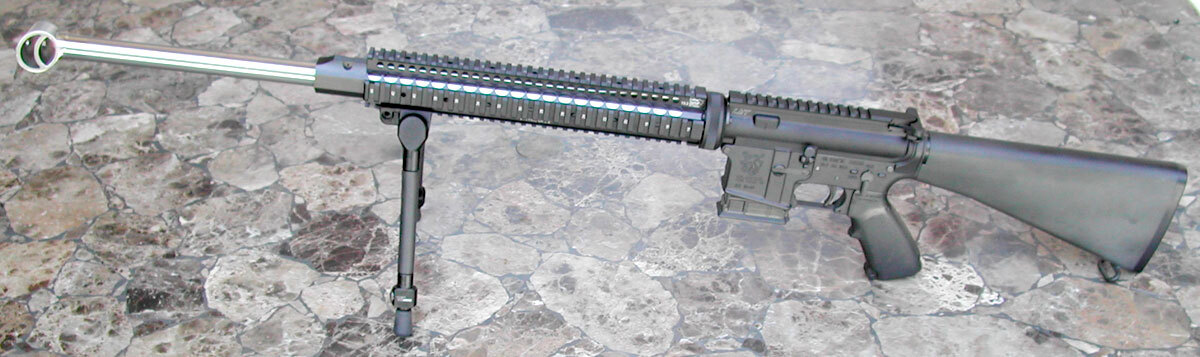
If you're assembling a .204 Ruger AR, the caliber-specific barrel is the starting point. Quality barrels are available from established manufacturers including Shaw and other precision barrel makers. A 20-inch stainless HBAR-style barrel is a particularly useful configuration for shooters who prioritize stability and precision without moving all the way to an extremely long varmint barrel.
A .204 Ruger upper typically combines the caliber-specific barrel with a standard AR-15-pattern upper receiver and compatible bolt carrier group, free-float handguard, appropriate gas block and gas tube, and the shooter's preferred muzzle device.
Headspace should always be verified correctly when barrels and bolts are assembled. At Ballistic Barn, our assembled uppers are built and checked as complete systems rather than treating headspace as an afterthought.
Optics depend heavily on intended use. A moderate- to high-magnification optic can take advantage of the .204 Ruger's precision and flat trajectory when hunting small varmints or shooting targets at longer distances.
Rather than focusing on a fixed dollar amount for a build—which can change significantly as component pricing changes—it makes more sense to select components based on intended use. A lightweight calling rifle, a heavy prairie-dog rifle, and a precision bench setup may all use .204 Ruger while requiring very different barrel profiles, optics, handguards, and accessories.
Advantages and Disadvantages: Weighing the Pros and Cons
The .204 Ruger in an AR-15 has several important advantages. Its combination of high velocity, mild recoil, flat trajectory, and excellent varmint-bullet selection makes it especially effective when the target is small and precise shot placement matters. Low recoil also helps the shooter stay on target and can make spotting impacts easier.
The AR-15 platform adds another advantage: rapid follow-up shots. For varmint control or predator hunting, that can be valuable when multiple targets appear or a quick second shot is required.
There are tradeoffs. .204 Ruger ammunition is not nearly as common as .223 Remington or 5.56 NATO, and shooters should not expect every sporting-goods store to have the same variety of loads available. Reloading can therefore be especially attractive to high-volume .204 Ruger shooters. Hornady currently continues to list .204 Ruger cartridge cases for reloaders, providing ongoing component support for the cartridge.
The cartridge is also specialized. Its light, rapidly expanding bullets are excellent for varmints and many predator-hunting applications, but the .204 Ruger is not intended to replace larger cartridges when heavier bullets and greater terminal performance are required.
High velocity can also increase throat erosion compared with lower-velocity cartridges. Actual barrel life varies tremendously according to barrel material, firing cadence, ammunition, heat management, cleaning practices, and the shooter's accuracy requirements, so a universal round-count estimate is not especially useful.
Real-World Applications: From Prairies to the Range
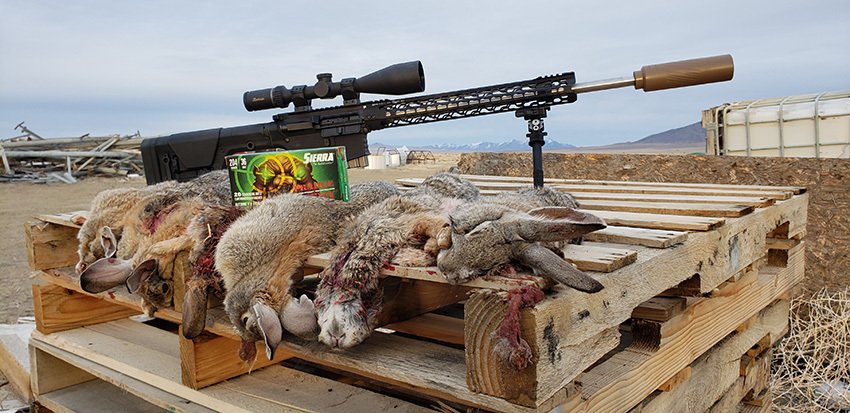
In the field, the .204 Ruger AR-15 excels as a varmint and predator platform. Prairie dogs, ground squirrels, rabbits where legal, foxes, and coyotes are the types of applications that helped establish the cartridge's reputation. The combination of high velocity, flat trajectory, and low recoil makes it especially useful when targets are small and distances vary.
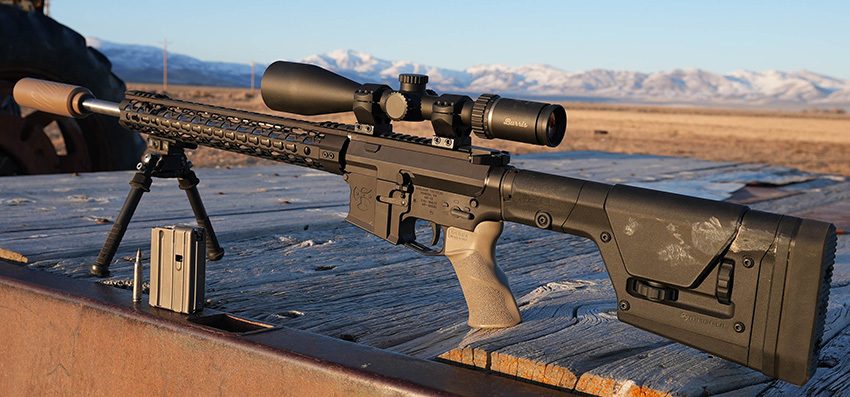
The cartridge is also enjoyable on the range. Its mild recoil allows shooters to concentrate on fundamentals and makes extended precision sessions more comfortable. A quality barrel, good ammunition, properly configured gas system, and appropriate optic can turn a .204 Ruger AR into an exceptionally capable small-caliber precision rifle.
For shooters coming from .223/5.56, the attraction is not that .204 Ruger replaces those cartridges. Instead, it provides a more specialized option when high velocity, minimal recoil, and varmint-oriented performance are the priorities.
2026 Update: Why the .204 Ruger Still Makes Sense
More than 20 years after its introduction, the .204 Ruger has avoided becoming an obsolete novelty. Hornady continues to support the cartridge with ammunition components and reloading brass, and the cartridge remains well suited to one of the AR-15 platform's greatest strengths: configuring the same basic rifle around a specialized upper for a specific purpose.
That longevity matters. Shooters looking at a niche AR-15 caliber should consider not only ballistic performance but also whether ammunition, brass, bullets, barrels, and replacement components remain available. In 2026, the .204 Ruger continues to have meaningful commercial support while offering a performance profile that is still distinctive: very high velocity, low recoil, flat trajectories, and excellent varmint capability.
Wrapping It Up: Is .204 Ruger AR-15 Right for You?
The .204 Ruger on the AR-15 platform is a specialized combination: fast, accurate, soft-shooting, and particularly well suited to varmint and predator applications. It gives AR-15 owners a way to substantially change the rifle's performance without abandoning the familiar small-frame AR platform.
If your priorities are prairie dogs, predators, small targets, low recoil, and a flat trajectory, a .204 Ruger upper remains a compelling option in 2026. If inexpensive ammunition and maximum availability matter more, .223/5.56 will still be the more practical choice for most shooters.
Why shop Ballistic Barn?
Ballistic Barn has over 30 years of combined experience specifically in the AR-15 parts space. We build quality uppers for the AR-15 platform as well as AR-10(308) and AR-9 platforms. We have been an innovator in design and function for some time now with many of our ideas and designs still in wide circulation to this day. We are a leader in the AR-15 parts space with every part from muzzle to stock.
Shop BallisticBarn.com with confidence, knowing that our experience in the industry and knowledge of our OEM products insure precise in fit and function of each and every part. We constantly keep our OEM machine shops in check with parts inspections and rigorous quality control.
We pride ourselves on delivering the best quality products at the best pricing to give our valued customers the best bang for their buck. We have hand picked each and every one of our OEM machine shops for exceptional quality and realistic pricing. We have very little overhead and as a result we are able to deliver a higher quality product than our competitors and while keeping prices low and reasonable.
Checkout our selection of AR-15 uppers and complete upper receivers here and thank you for shopping Ballistic Barn!